
There’s no shortage of companies talking about AI.
New tools are launched daily.
Features are relabelled as “AI-powered.”
Entire roadmaps are being reshaped around it.
But beneath the surface, there’s a growing divide:
Companies that use AI
vs.
Companies that are building with AI
It’s a subtle difference, but it has significant implications.
The Rise of “Bolted-On” AI
For many organisations, AI adoption starts the same way:
- Add a third-party AI tool
- Layer it onto an existing workflow
- Use it to automate a specific task
This approach is fast.
It shows immediate activity.
It creates the perception of progress.
But it also comes with limitations:
- Limited control over outputs
- Dependency on external tools and APIs
- Minimal differentiation
- Difficulty integrating deeply into core systems
Most importantly:
It rarely changes how the business fundamentally operates.
What “Built-In” AI Actually Means
Building AI into your systems is a different approach entirely.
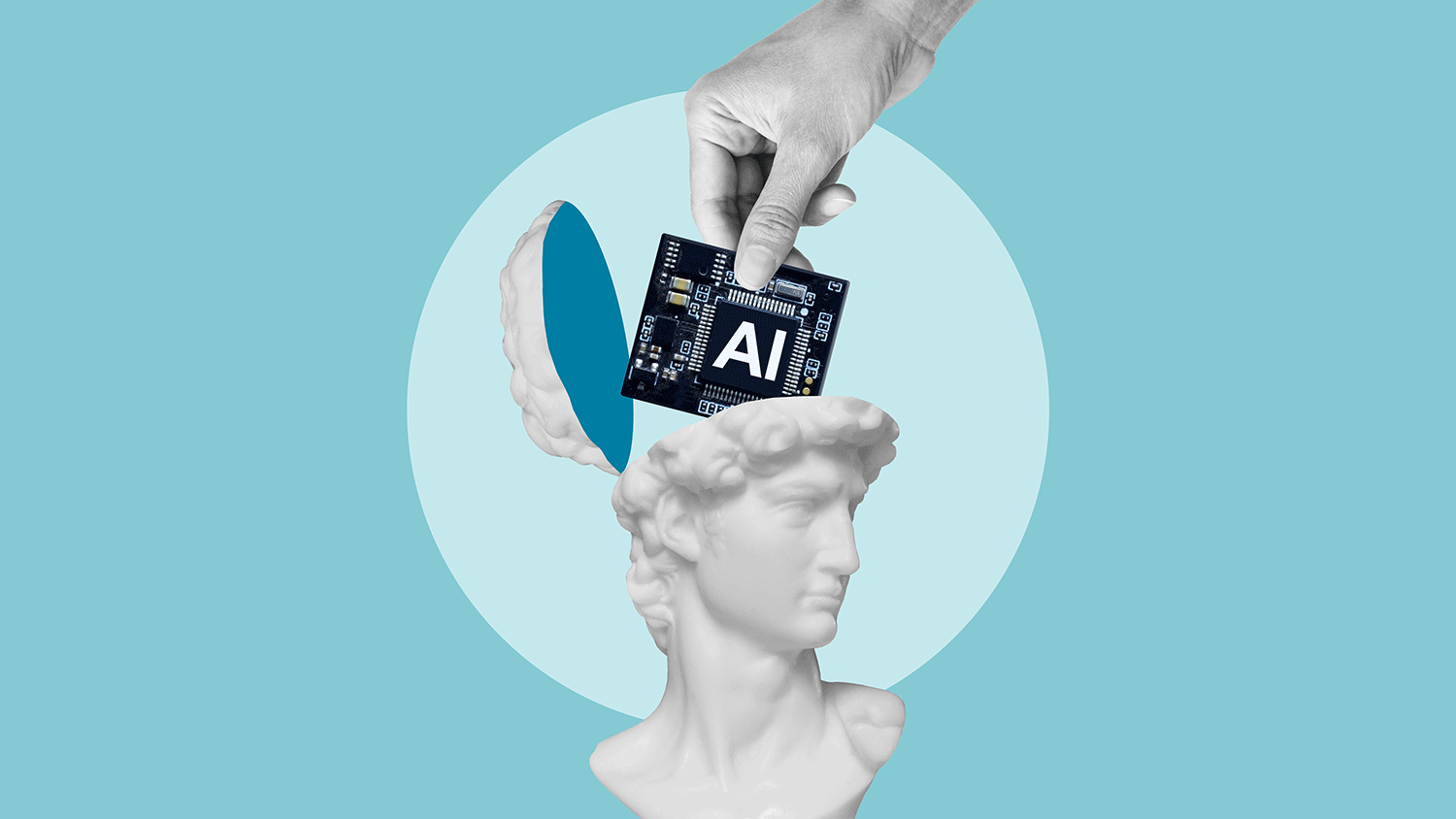
It’s not about adding a feature, it’s about designing systems where AI is part of the workflow itself.
That includes:
- Embedding AI into core product experiences
- Designing workflows that assume AI participation
- Structuring data pipelines to support continuous learning
- Creating feedback loops to improve outputs over time
This is where previous discussions on LLM readiness become critical.
Because you can’t build AI into your systems without:
- Clean, structured, accessible data
- Defined use cases tied to business outcomes
- Clear validation and QA processes
- Measurable performance benchmarks
Why “Built-In” AI Delivers More Value
When AI is embedded into systems, not layered on top, it behaves differently.
1. It Solves Real Problems, Not Just Tasks
Instead of automating isolated actions, built-in AI improves entire workflows.
2. It Compounds Over Time
With feedback loops and structured data, outputs improve continuously.
3. It Creates Differentiation
Anyone can use the same third-party tools.
Very few can replicate your internal systems.
4. It Enables True Efficiency Gains
Not just time saved on tasks, but measurable improvements in throughput, accuracy, and quality.
The Hard Part: Why Most Companies Don’t Do This
If building AI into systems is more valuable, why isn’t everyone doing it?
Because it requires organisational maturity.
From our research and experience, the barriers are consistent:
- Lack of clear AI strategy
- Unstructured or inaccessible data
- No defined KPIs for AI performance
- Absence of QA and validation frameworks
- Over-reliance on tools instead of system design
This is why many organisations remain stuck in “bolted-on” mode.
Guardrails and QA: Non-Negotiable for Built-In AI
When AI becomes part of your system, the stakes change.
You’re no longer experimenting, you’re operating.
That requires:
Guardrails
- Defined boundaries for AI usage
- Standardised prompts and workflows
- Data access controls
QA Systems
- Validation steps embedded in workflows
- Output quality benchmarks
- Monitoring and feedback loops
Without these, built-in AI introduces risk at scale.
Measuring What Matters: From Activity to Impact
One of the biggest differences between bolted-on and built-in AI is how success is measured.
Bolted-on AI metrics:
- Number of tools adopted
- Volume of usage
- Tasks automated
Built-in AI metrics:
- Reduction in end-to-end workflow time
- Improvements in output quality
- Decrease in error rates
- Impact on revenue, conversion, or delivery speed
This shift, from activity to impact, is where real value is realised.
AI Advantage Comes From Ownership
The gap between companies using AI and companies building with AI will widen.
Not because of access to tools, but because of how those tools are used.
AI doesn’t create advantage on its own.
Ownership of the system around it does.
The companies that win won’t be the ones with the most AI features.
They’ll be the ones that:
- Integrate AI into how they operate
- Continuously improve through feedback and data
- And measure impact at a system level
If you’re moving beyond experimentation and want to embed AI into how your business actually operates, we can help.
Get in touch to discuss your AI strategy.