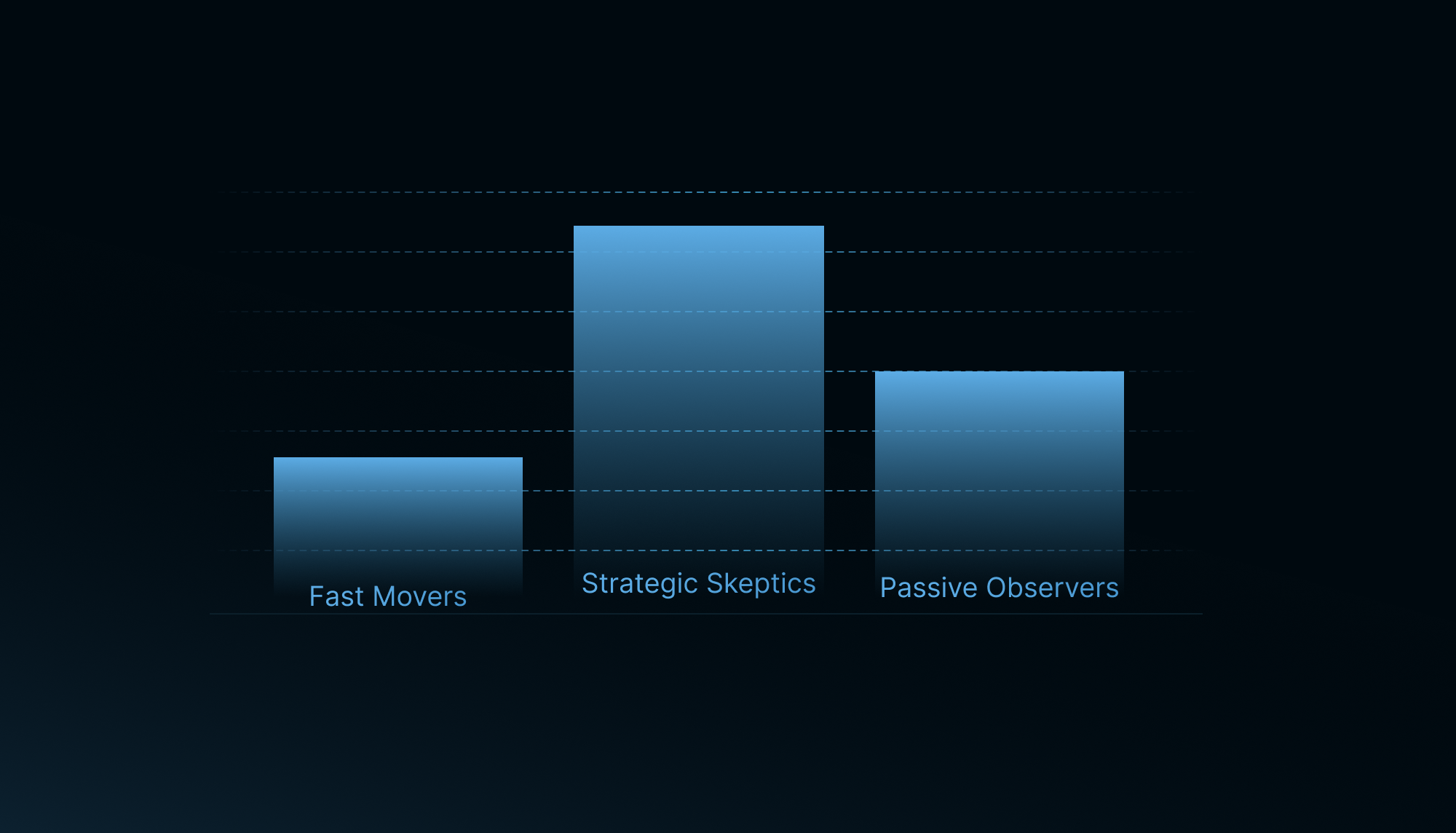

As AI rapidly reshapes software engineering, leaders are under increasing pressure to decide how their teams should adopt new tools, and how fast. But beneath the noise and urgency, not every organisation is moving in the same direction, nor at the same pace.
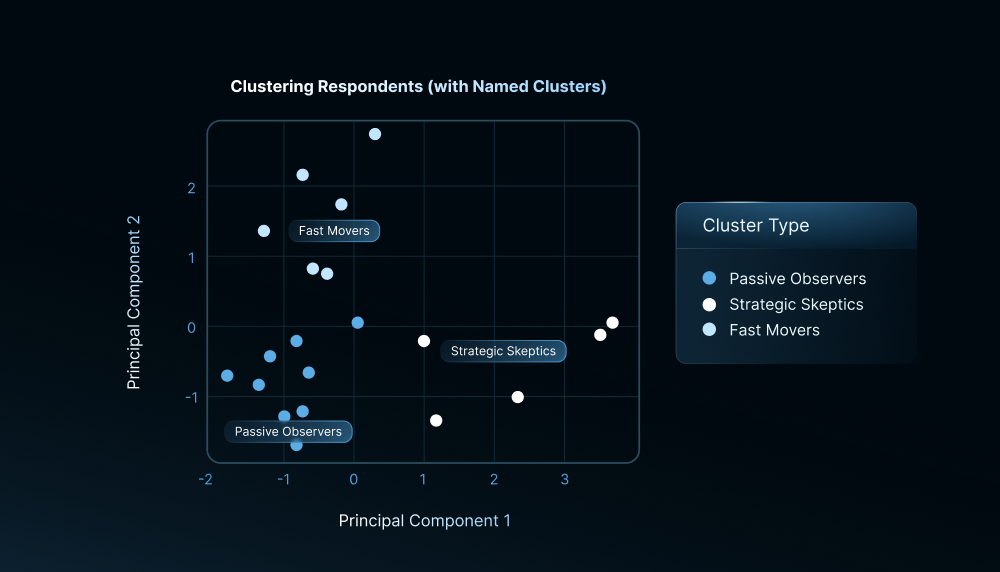
In our research for AI in Engineering: Insights from Today’s Tech Leaders, patterns began to emerge. After analysing survey responses and interviewing over one hundred engineering leaders, we identified three distinct archetypes that capture how organisations are approaching AI today.
These archetypes aren’t “good” or “bad.” Rather, they reflect different philosophies, levels of maturity, and assumptions about where AI fits within engineering.
Understanding where your organisation sits can reveal hidden risks, and overlooked opportunities.
1. The Fast-Moving Early Adopters
High velocity gains, rapid implementation, low concern for long-term risk
Fast-moving teams are leaning into AI with remarkable intensity. They report the highest perceived velocity gains (7.6/10), and describe current AI tooling as fundamentally reshaping engineering. Their mentality is direct: adopt now or become obsolete.
These organisations often use tools like Claude Code and Cursor extensively, trusting outputs and prioritising coding throughput above all else. Their approach is bold, opportunistic, and geared toward short-term leverage.
The opportunity:
A significant uplift in delivery velocity and early competitive advantage.The risk:
Without guardrails or governance, these teams may unknowingly accumulate a mountain of unverified, AI-generated legacy code-creating long-term instability.
2. The Strategic Skeptics
Moderate velocity gains, strong processes, deep concern for engineering integrity
Strategic Skeptics approach AI adoption with caution and craftsmanship. They still report notable velocity gains (4.6/10), but view AI as a tool that needs strict oversight.
Many leaders in this group compare AI to a junior developer: helpful for refactoring and repetitive work, but prone to errors and limited in its understanding. Their primary fear? Technical debt and the erosion of core engineering skills.
AI is permitted, but with guardrails, reviews, and approval checkpoints. Quality and long-term maintainability matter more than short-term gains.
The opportunity:
Stronger code quality and reduced long-term risk.
The risk:
Over-caution can become inertia, leading to competitive lag at a time when engineering velocity is increasingly tied to market advantage.
3. The Passive Observers
Minimal velocity gains, limited strategy, prioritising stability over experimentation
Passive Observers are generally in the earliest stage of AI maturity. They report the lowest velocity gains (3.6/10), and often cite business constraints or regulatory pressure as reasons for slow adoption.
For many in this group, AI is simply not the most pressing problem. Leaders report that their real bottlenecks lie in organisational alignment, product clarity, or market demands, not coding speed.
There is experimentation, sometimes with multiple tools – but adoption lacks direction or standardisation.
The opportunity:
A clean slate to build a thoughtful, stable AI strategy when the time is right.
The risk:
Falling behind peers who are already operationalising AI at scale.
Mapping the AI Adoption Landscape
When we mapped teams based on how they are actually using AI today, clear patterns began to emerge. The chart below shows three distinct clusters that reflect common approaches to AI adoption across engineering organizations.
Why These Archetypes Matter
No single archetype is “right.” Each reflects a mindset shaped by business constraints, risk tolerance, and engineering culture.
But understanding which mindset your organisation unconsciously aligns with can illuminate:
- Where you may be overlooking value
- Where your biases are creating blind spots
- How your current trajectory could impact long-term engineering productivity and competitiveness
For example:
- Fast-Moving Early Adopters need governance and process to avoid long-term stagnation from unverified code.
- Strategic Skeptics must guard against paralysis by analysis, which could cost them market relevance.
- Passive Observers must avoid becoming so stabilised that innovation stalls entirely.
Each path offers opportunity, but each also carries risk.
Where does your organisation fall?
If you’re curious about how these archetypes were identified, the data behind them, and the specific patterns that separate high-performing engineering teams from the rest, you can request the full report here.